Telling Stories
Disneyland speaks a universal language (p. 40).
What’s your story? What do you tell people about yourself? How are you directing the lead actor (you!) on the stage of life? All good questions.
[Disneyland is… what it is…] but it “stood first on the shoulders of story (p. 40). Imagine a system, institution like that of Disney, but without a clear message, without a known experience. You already know what you’re in for (sort of…) when you visit, based on so many previous inputs – movies, short films, characters, etc.
What if school was the same way? What it school (public, private, doesn’t matter) already had a story, had a known experience? Does it? Is it good or bad? Is schooling itself the protagonist, or the antagonist? Who’s the hero in schooling?
Disney approached building parks like a movie set – the parking lots took the shape of lobbies to the theater within, and all guests are afforded the “red carpet treatment” (p. 41).
Main Street USA, the entry to Disneyland and Disney World, sets the tone for the rest of the story, and raises the expectation of a good story. If you’ve ever been, you know the feeling of awe, of wonder, and of excitement that builds as you stroll down the paved path lined with curious shops, scents of popcorn, and a castle at the horizon. What a wonderful way to start the day!
How do you start the day? How do those in your care start the day? For some, it’s a ride on a school bus. For others it’s a walk across the parking lot after the car rider line drop off. It’s dark, cold, and you’d rather skip it you could.
How do we make that experience better? How do we enable the red carpet treatment up front? What can you do to make it happen, and what role do you play in the production that is school?
There are two lessons – 1) we must make sure to meet the needs of those around us by sharing stories, and setting the stage for success, and 2) we have to live a great story. Put words into action. Make meaningful choices within “our own stories, too” (p. 45).
Universal (another park purveyor) calls their attractions ‘rides’. Disney calls them adventures, experiences, and stories. What’s the difference? Who narrates the story of your life?
“Too many people live their lives like they are … an original attraction” (p. 46). Get busy revising! Edit your life. Splice it together the way you want it.

You’re both the director, and the leading hero. You have the power to script your own adventure, so why ever go back to the “meaningless scenes stitched together by the forgettable thread of wasted time?” (p.46). Action!
“Edit your life frequently and ruthlessly. It’s your masterpiece after all.” – Nathan W. Morris
Facing Fear and Failure
What’s holding you back? What if you put on a show, and nobody came? Would you continue down the same path? Or would you resign?
You “need to embrace fear and failure” (p. 54).
Easier said than done, that’s for sure. But if you’re there, on the cusp of fear, on the brink of failure – you still have grip, you’ve still got traction, and you can still make it.
Like tires on a car squealing on the edge of slipping, you’re still making forward progress, and even though you’re scared witless, you’re making it happen.
You’re “very much on the right path” (p. 54).
The other course I’m taking this semester is centered on survey design and statistics. It’s all about getting the best data, and about driving validity, and later, generalizability, through solid design strategies.
Barnes (2015) describes a story where Disney screen tested Snow White, and most of the audience left halfway through. Little did he know they were college students heading back before curfew.
Is your data valid? (or is it “are your data”?) When you collect and analyze information around you, are you making sure it’s good to go? What does your design look like for collecting feedback, personal stories, performance metrics, and more?
Are people (seemingly) walking out on you, but really leaving to go do something else totally unrelated?
Depending on the decisions needed, be sure to collect solid data – or as we say in the quantitative sciences – data that is statistically significant.

“Many people avoid success, but it is impossible to avoid fear and failure; they are part of the human experience” (p. 56).
Action is important. Take that step. Have that discussion. Inaction paralyzes us. Makes it never so. Don’t fall for its trap.
“Fear is the boss you fight before taking your life to the next level.” – Stephen Guise
I went sledding with my kids this afternoon. We started on the smaller hill, before graduating to the much taller one… I am not an adrenaline junkie, and avoid things like haunted houses, Hollywood Studio’s Tower of Terror, and the possibilities of certain doom on the sledding hill.
But my kids wanted to go. “Let’s go dad, to the top!” So we went. And down we swirled – and successfully so!

The risks are minimal, right? Fear and failure translate into risk. And the good news? Risk can be managed…
I may have not won a particularly nasty fight with a mini-boss on the snow level (video game parlance here…) but I felt good about having embraced my fear of “too fast, not enough brakes, steering, or safety gear” that is sledding.
I felt good. The kids then thought it’d be a good idea to try laying on their stomachs, face first to go down the hill…

Ok, let’s talk about these memes for a minute. What are they, and how do you make them?
Memes are easy ways to telling stories through popular imagery – they tell a story, layered on top of a story that you’re already familiar with, or one that is easy to absorb. At least, that’s my definition for what a meme is, and how it works for me.
When I make memes on the laptop, I go here: https://imgflip.com/memegenerator
Most of the popular templates are available there, and you can visually browse instead of having to know the names of each meme.
Yes, they have names. The one above is called “Running Away Balloon” and the guy making tough choices is “Two Buttons”. One of my favorites is the “Distracted Boyfriend” one – you can see him in the previous post, and will likely make another appearance later…
“The tragedy of life is often … not in living above our ability, but rather in our living below our capacities.” – Benjamin E. Mays
Mastering Curiosity, Confidence, Courage, and Constancy
“The melody of mediocrity” (p. 68).
Oh, I hate it so. Excellence is more my tune. A drive to seek more, to improve, to make better, and to explore through genuine curiosity.
“Explain it to me like I’m in kindergarten.”
But.
“Somewhere on the road [ to adulthood ] too many of us stop being curious” (p. 71). Why?
Why do we allow ourselves to let go of the “big eyes” and of all the wonderful things around us that makes the world the way it is? Why do we no longer ask questions – just to ask them? After all, it’s how we learn best.
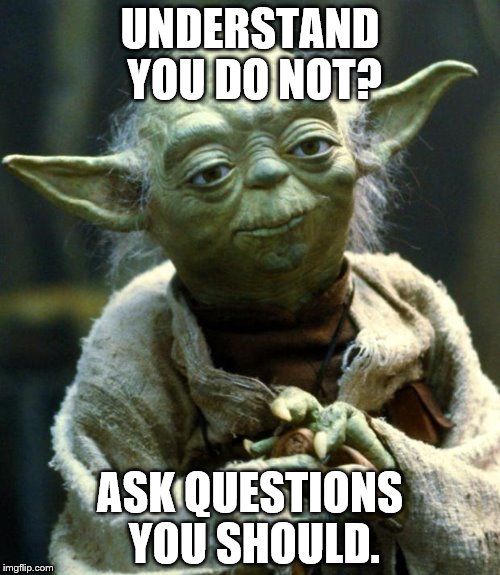
When you’re able to ask questions, honestly, and without ulterior motives, you’re opening up doors to forward movement, towards growth, and towards a better understanding of the variables that make change happen.
Without a childlike wonder about those things of which you know very little about, how do you expect to expand your understanding.
Be more like our new cat, Binx Bonx. She’s curious. She gets in all the nooks a crannies, and learns all she can. And what does she gain from that? Everything.

“… life is composed of lights and shadows …” (p. 74)
“You have to make the conscious choice to be courageous” (p. 79).
“Psychological studies show that high achieving, successful people are not overly concerned about what others think” (p. 81).
Correct. And I’m not. And that drives some people bonkers, and others to loathe me. And somewhere in that chaos, I’m okay with not pleasing everyone, and moving forward on my path, making my map as I go.

Perspective, after all, comes by looking backwards. Or is it forward? I guess it depends…
A friend of mine from another life had a theory about people, and it went something like this: You can tell a lot about people when you figure out where they live – in the past, on the present, or in the future.
Those in the past hold on to things, and bring back memories of the good old days. Those in the present live for the now, and see things as they happen. And those of us who are already in the future know where they’re going to get there. Where do you live?
This blog post from Dan Rockwell is a great followup to this idea – especially when it comes to holding on tight, and resisting change.
“Be brave and courageous. Most importantly, keep moving forward” (p. 81).
Excellence is a habit. True that.
“We are what we repeatedly do. Excellence , then, is not an act, but a habit” – Aristotle (p. 82).
What you do each day counts. Everyone around you can see that. It’s what you bring to the table day in and day out that makes it happen, that feeds others, and that tell the story of you.
Do you arrive on time? Are you prepared for the meeting? Are you ready to ask the tough questions? Do you walk the walk?
If you do, then you’re on your way towards excellence. If you don’t, it’s time to reflect. Yes, yes, the old adage about making your bed each day, and so on… but it’s true.
You either bring your A game every day, or you don’t. Yoda-style! I bet you can try a little harder tomorrow, right? And the next day, and the next day… if you adopt a habit (and that only takes 17 days or so) there’s no telling where you’ll end up?
“Disneyland always shows up” (p. 83). Do you? If you answered yes, would those you lead and inspire agree with you?
“What you do every day matters more than what you do every now and again.” – Gretchen Rubin
Learning Your Lessons
“Why worry? If you’ve done the very best you can, worry won’t make it any better” (p. 91).
I often say that luck favors the prepared. I shared a story with a few colleagues last year about how we had a gas leak behind our house, and had to evacuate on orders from the Fire Department.
We grabbed our ‘go-bags’ and left, cats and all. In 2 minutes we were on the road, and away towards safety. In the end, our house didn’t blow up (nice!), and we could return safely.
“You have go-bags?” – Molly
Yes. Yes we do. Prepared for stuff. What’s so wrong with that? I carry a tourniquet with me almost all the time, and I have other gear nearby that meets the mission requirements.

I have training, too, that makes me more prepared than others. And why? So I don’t have to worry so much. Worry, or mitigating risk, is like that dragon from the last post. It’s always around, always asking “did you do your best?” or “are you prepared if X happens?”
I like to answer ‘yes’ to as many of those questions as I can. Go-bag or not, preparing to fail is a worthy exercise, so that when you do, the landing won’t be so bad.
There was a real chance our house could’ve been destroyed – gas was literally flowing wildly from a gas well… but in mitigating the action of being able to leave quickly, at least we put ourselves at a safe distance from that risk.
I try to do the best I can at all times. Why not? There’s only so much time left… I’d rather my story sells, than lies forgotten on the publisher’s floor.
Who’s responsible for your story? Do you take responsibility for your script, and own the outcomes of mistakes, blunders, and side-quests? You should.
“Once you’ve lived through the worst, you’re never quite as vulnerable afterward.” – Walt Disney, on failure and learning from it. (p. 99)
I’d like to avoid ‘the worst’ if at all possible through planning, mitigation, and experience-based decision making. But chance is what it is, and I’m as ready as I can be.
“Experience is the name everyone gives their mistakes.” – Oscar Wilde
Barnes, J. A. (2015). The Wisdom of Walt – Leadership Lessons from the Happiest Place on Earth. Lake Placid, NY: Aviva Publishing.